Archives

Dessalines’s America: A Decolonial Critique
After declaring independence from the French on January 1, 1804, Governor General for life Jean-Jacques Dessalines defended the new nation of Haiti in an Atlantic world determined to refuse its claims to antislavery and anticolonial sovereignty. Speaking to the Haitian people – and addressing anxious onlookers in the Atlantic world – on April 28, 1804, Dessalines proclaimed “Yes, I have saved my country; I have avenged America.” The object of his vengeance was clear: the remaining colonists on the island, whom he had ordered killed in the early months of 1804. Yet the beneficiary of his vengeance, the “America” for whom Dessalines exacted a “terrible but just” retribution, was multivalent and complex. Dessalines’s “America” was a transhistorical concept that bridged past, present, and future to encompass the violent colonization and resistance of Indigenous and Black people. By exploring the richness of Dessalines’s foundational anticolonial utterance here, we gain a better understanding of Haiti and its place in studies of America’s long nineteenth century. Ultimately, Dessalines’s “America” helps scholars decolonize the idea of “America” and an overly US-centric concept of American Studies.

Reflections on the Crisis at Hand: a Roundtable, Part 2
In part two of our roundtable, we start with a question posed by Efren Lopez: How might we funnel the labor and resources of the university, the museum, or any institution in which we work towards the Black Lives Matter movement, abolition, or insurrection more broadly? And what futures do you envision for these institutions that would make them fertile seedbeds for the sort of garden Bradley Craig describes—something capable of fostering “sustainability, care, and pleasure?”

Reflections on the Crisis at Hand: a Roundtable, Part 1
Insurrect! is a new digital space for radical thinking in Early American Studies. Our first roundtable features early career researchers who are attuned to colonialism as an ongoing system of power, and whose work spans disciplines of study as well as geographies outside of nationalist borders. In response to the upheavals of 2020, the editorial team thought it only fitting to begin our roundtable by asking this question: How has this moment of anti-colonial uprisings and demonstrations by Black Lives Matter and Indigenous activists shifted your work in early American studies—either as a researcher, an educator, a curator, a public historian, or an activist?

Toppling Colston, Centering Black Lives
There is an empty plinth in Bristol. It sits within a stone’s throw of the Cenotaph (Bristol’s monument to its First and Second World War dead), a plaque commemorating the Burma Campaign of 1941-1945, a statue of the conservative Irishman and imperialist Edmund Burke, and an Indian restaurant named 4500 Miles from Delhi. The plinth, until very recently, held its own public signifier of Britain’s former empire: the slave trader and Royal African Company (RAC) employee, Edward Colston. The plaza lies in the shadow of Colston Tower, and a heavy traffic of lorries and commuters follows the curve of Colston Avenue around it. The fact that Black Lives Matter activists had to hoist Colston into Bristol’s harbor for the link between this local ‘philanthropist’ and the state-supported dispossession, sale, or violent death of 1.3 million Africans to be widely acknowledged is a curious feature of Britain’s simultaneous remembering and obliviating of the enormous wealth generated from its investment and perpetuation of Atlantic slavery and the slave trade. However, not only considerations of wealth or institutions are missing from both common memory and how the statue’s fall has been discussed – Black people’s histories and presents are all too often obscured behind recitations of Colston’s biography or a focus on the institutions to which he belonged.

American Private Schools as Monuments to Racism
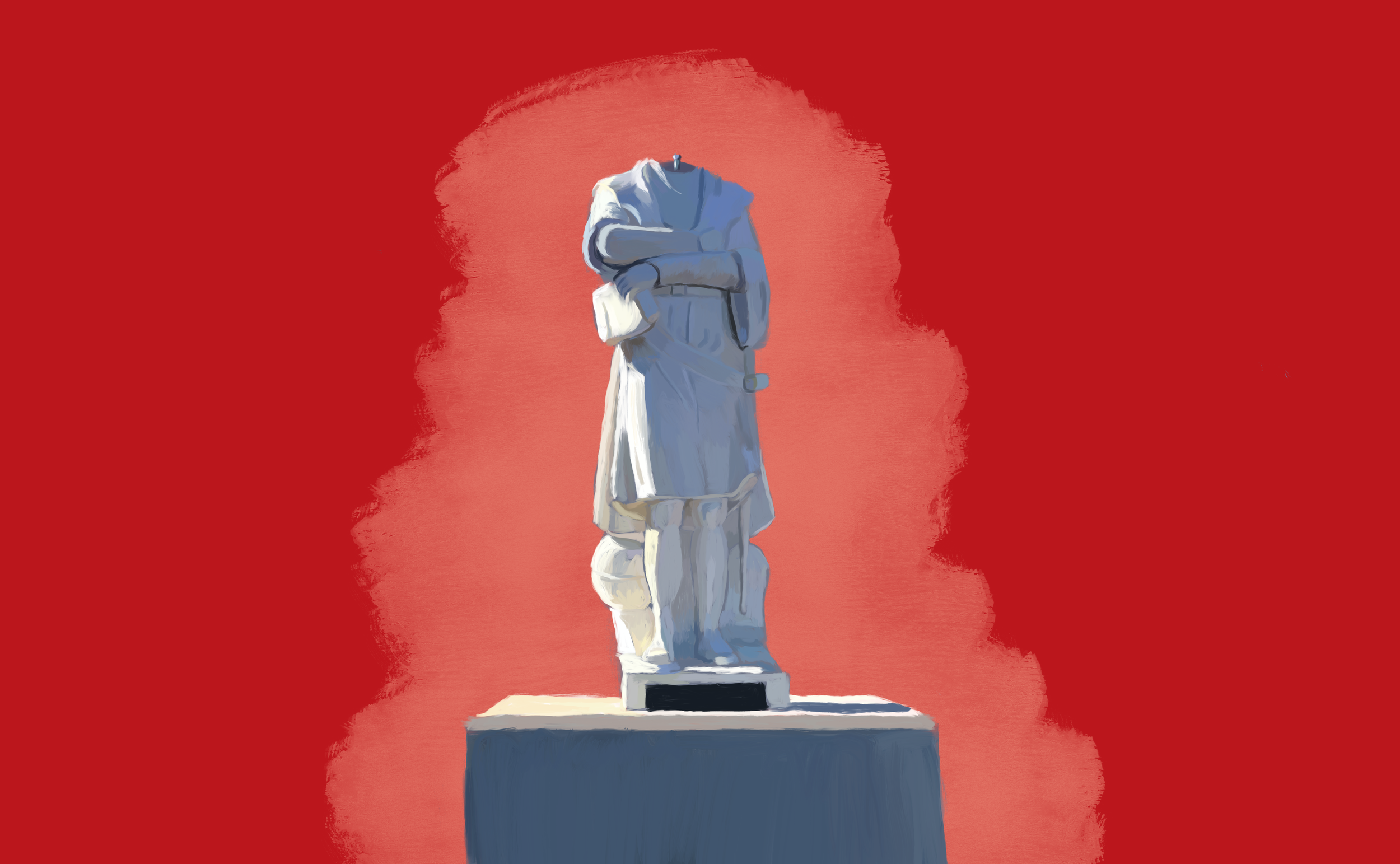
Summer 2020 has seen Black Lives Matter and Indigenous rights activists toppling countless statues commemorating racism and racists both in the Americas and around the world. Not all monuments to the past are cast in bronze, however. From the names of our streets to the layout of our neighborhoods to the schools our children attend, memorializations of slavery and segregation surround us in the United States. American private schools, especially, have long functioned to reinforce class and racial hierarchies, and themselves act as monuments to racism and segregation.